
Space for everything
But where to put it?
Greetings, and happy new year — it’s not too late for such a wish, is it? We’re in the second month of 2026, and I know several folks who’ve already had a rough start and could use a reset, but perhaps that puts too much pressure on the “new” aspect and somewhat arbitrary switch to a new calendar. We can reset, to a degree, any time.
I’ve been waiting for space within me to open up for writing in here again and connecting with you — the plural group of Joy Magnets subscribers here in Substackville and you, Dear Reader, taking the time to check out this post. This past weekend I attended a retreat with Betsy Bertram of Beaufort, N.C., that focused on the ether element — that … ethereal quality that encompasses the other elements of earth, fire, water and air and holds everything. If that’s so, I wondered in one of our morning meditations, where are the boundaries of what we consider to be “the universe,” especially if it’s always expanding, and especially if we live in a “multiverse”?
Space is vast and specific at the same time. To consider the infinite and the history of creation while, as I am right now, sitting on the couch at 7 a.m. with my cat curled up next to me and the fan running from the electric fireplace, three candles burning on the shelf above it, my fingers trying to make sense of my thoughts and feelings through keyboard clicks, the instant decaf coffee cooling in a mug under the lamp providing light, ocean waves crashing outside the windows — in other words, the tangible things my senses can perceive and name — is to be expansive and small in the same moment. Evanescent and grounded all at once, all the time.
I’ve been thinking a lot about landscapes and how we fit into them, how we take up space and arrange the environments around us. Matthew and I are more or less unpacked in our new-to-us condo at the beach, and I’ve watched myself decide how to fill the spaces in it with our stuff. We’re in a sort of finishing-touches phase, with pottery bowls and platters to display here and there, artwork to hang — where, exactly? These are fun but also at times overwhelming decisions to make, and I’m finding that some items seem to not fit in our new, smaller home. And that’s okay, though it’s tricky to come to terms with changing values and preferences as they relate to material objects. Some things don’t hold the sentimental weight or meaning they used to, but surely that reflects some sort of growth or evolution, if not simply altered tastes? And isn’t it healthy to be aware of and responsive to such information? Ether helps us let go of what’s holding us back or keeping us stuck.
To help my brain distinguish ether from air, I reasoned that air can be heard and felt, as in the forms of breath and wind. We can even see breath in cold air and the effects of wind in nature — water lapping, leaves clapping. To bring the construct even closer to home, ether is the space held in the lungs that is filled by air (or at least that’s how I like to think about it).
And not to bury the lede, but the concept of ether has taken on extra resonance in the wake of my father’s death. I wrote in November about how he entered hospice care. For four weeks, I sat with him for hours each day until he died on Dec. 10. Matthew and my sister and I cleared out his nursing home room the next day and met with the priest that afternoon to go over the funeral Dad had planned for himself. Then we went into excavation mode, sorting and packing up stuff in Dad’s house in anticipation of selling it.
I spent a day in the basement with my sister going through boxes that apparently had not been opened since our parents had moved into that house in the mid-1980s. We unearthed a treasure trove of artifacts, including prom pictures of Dad with girls who were not our mother; homework from his elementary school era, with his tightly cursive lettering vastly different from his adult handwriting; and a knife collection. Much of it went to the dump, which was kind of heartbreaking. I vaguely remembered the knives but the mementos from his childhood and teenage years were fresh to me, even in their aged sepia state. It was like meeting parts of my dad I’d never known about, seeing stages of his life sprout along the spiral of his 82 years. The experience also made me wonder why I’m still holding on to my graduate thesis, high school yearbooks and various elementary school projects. What else could I do with that space? Space, when emptied, doesn’t necessarily need to be filled.
Our stuff isn’t who we are, but the things we acquire and create do live on after we’re gone. To what degree do such items shape our identity and give our lives meaning and enjoyment? What happens with all we receive and what we contribute? What shapes a legacy? Who’s going to deal with our stuff after we die? What do we want to leave them with?
Other aspects associated with ether are inspiration, creativity and deep listening. Soon after Dad died, two friends sent me poems. (It is so nice to be known.) One was “The Dead” by Billy Collins, and the other was this one, by a new-to-me poet:
Like Flicks of Flame
by Maurice ManningThere’s very little point in keeping
two yellowish red and black wings
from a moth I found disarrayed
in the grass. I could have mistaken them
for petals, but I knew what they were,
and when I picked them up the dust
from the wings left smudges on my fingers
as grainy newsprint used to do
when I delivered papers and rolled them
as I went. And coming home my hands
revealed a blur of backward letters.
The news was senseless. I liked to visit
an old woman who lived in a room
and had stories from an older time,
and then a priest who lived at the end
of my route. I believe the doors of Heaven
opened for both of them who are gone
from this world and yet still matter in it.
But maybe that’s the point, to mark
a life that lives beyond the life,
and as you read it there you see
the life is also reading you,
who found at your feet the flicker of wings
to be touching in the grass and touched them,
and then you took them home to keep.
I love the current of reciprocity threaded throughout this poem, and the connection to nature, not to mention “The news was senseless” and notions about what to keep. It’s especially resonant since I’m a fan of things that fly and was laid off from my newspaper job in September.
My dad was as complex a human being as any of the rest of us, and his absence is as vast and filling as however much space is contained in a universe, and beyond. He was a world unto himself, and inhabited a very specific world in the last few years of his life. As I walked into the nursing home the day after he died and entered his room for the first time without him in it, I burst into tears — no other phrase will do, as trite as it is — and said to Matthew, “He’s not here anymore.” And he never will be again, though he so much was for nearly four years. The noisy air mattress he’d been sleeping on for the previous few weeks to head off bedsores had already been removed (harsh), but his personal effects remained. For a few hours, Matthew and my sister and I surgically sorted through everything according to keep, donate or trash — the same process I’ve been going through with our house-to-condo move and in Dad’s house. And then we were done, and we left. I wonder who’s in Room 113 now.
At some point in the ensuing weeks, including during the limbo period between Dad’s death and the funeral, while engaging in the business of what happens after a death, and while listlessly preparing for what is supposed to be the joy-filled holiday of Christmas — this one, the first without either of our parents — my sister said, “So when do we get to grieve?” She had gone back to work a few days after Dad died. In my displaced home-away-from-homeness, I resumed yoga and Pilates classes around sessions of packing up stuff like my mother’s mother’s Royal Doulton china, a surprise discovery in the cabinet above the fridge — normally such a useless and inaccessible nook, it was a Pandora’s box crammed with items that brought my mom back to life as well, and her long-gone mother.
These exponentially unfolding oof! moments seemed to rather push the boundaries of the concept of ether, if you ask me, like an endless stream of exploding snakes in a can, minus the giggles in this video:
Instead of feeling the springy lightness of child’s play, I felt weighed down. In the days leading up to this past weekend’s beach retreat, with Betsy’s invitation to consider an intention around ether’s spaciousness, I held my sister’s question in the background. I wondered if the change of scenery would allow for some bereavement to come in, if spaces would open up for me to reflect on and somehow commune with my dad.
But here’s the deal: Grief, like ether, is a space that holds everything, and it is in everything. It permeates and colors all that we can experience through our senses and the other four elements. I was reminded that I didn’t have to go looking for it, or carve out a special time and place for it, although deliberately making room to connect with my father is nice. Grief finds you whether you search for it or not, and quite often exactly when you are not. On a trip with Matthew to a home-improvement store a few weeks ago, I made a joke at Dad’s expense. While I was chuckling we happened to be walking past a display of security cameras. I could see and hear Dad snickering as well, keeping an eye on us.
My dad’s absence, like my mother’s after she died in 2017, is a universe unto itself. It is huge and all-encompassing. But if ether holds the vastness of grief, it also holds joy and the mundane logistics and practicalities of daily life, with its rainbows and speedbumps. In early January we learned of a major snag with the deed to Dad’s house that is now going to set back being able to list it for sale by perhaps months. So much for rushing around to empty it! Thinking of ether in the poetic ways described during the retreat has helped me loosen my relationship with control and expectations. (Kind of. Work in progress.) So much has already gone off the rails this year for me and many other people, never mind the ongoing tumult in the world Out There, that I figured there must be room for all of it, because how can it be any other way? What we do inside the space is the thing.
That doesn’t mean all of the “all of it” is pleasant or tolerable or should be excused. In yoga, ether is associated with the fifth chakra (a locus of energy), which is in the throat — and therefore with sound, voice and expression. We get to draw boundaries and call B.S. on bad stuff and speak up for ourselves. I have often done so rather inelegantly, returning to attempts to be compassionate and forgiving toward myself and others — as in the Lord’s Prayer, which was part of Dad’s funeral: “Forgive us our trespasses, as we forgive those who trespass against us.”
Our voices can also be used for singing, as in the “Ode to Joy” hymn we included in the funeral after a friend had texted me a snippet of it in sympathy and support; in chanting the universal, primordial sound of “om” in yoga classes; and in stimulating conversations with friends and strangers who may become friends, as at retreats — the best of which create safe spaces for holding anything that is offered and everything that arises.
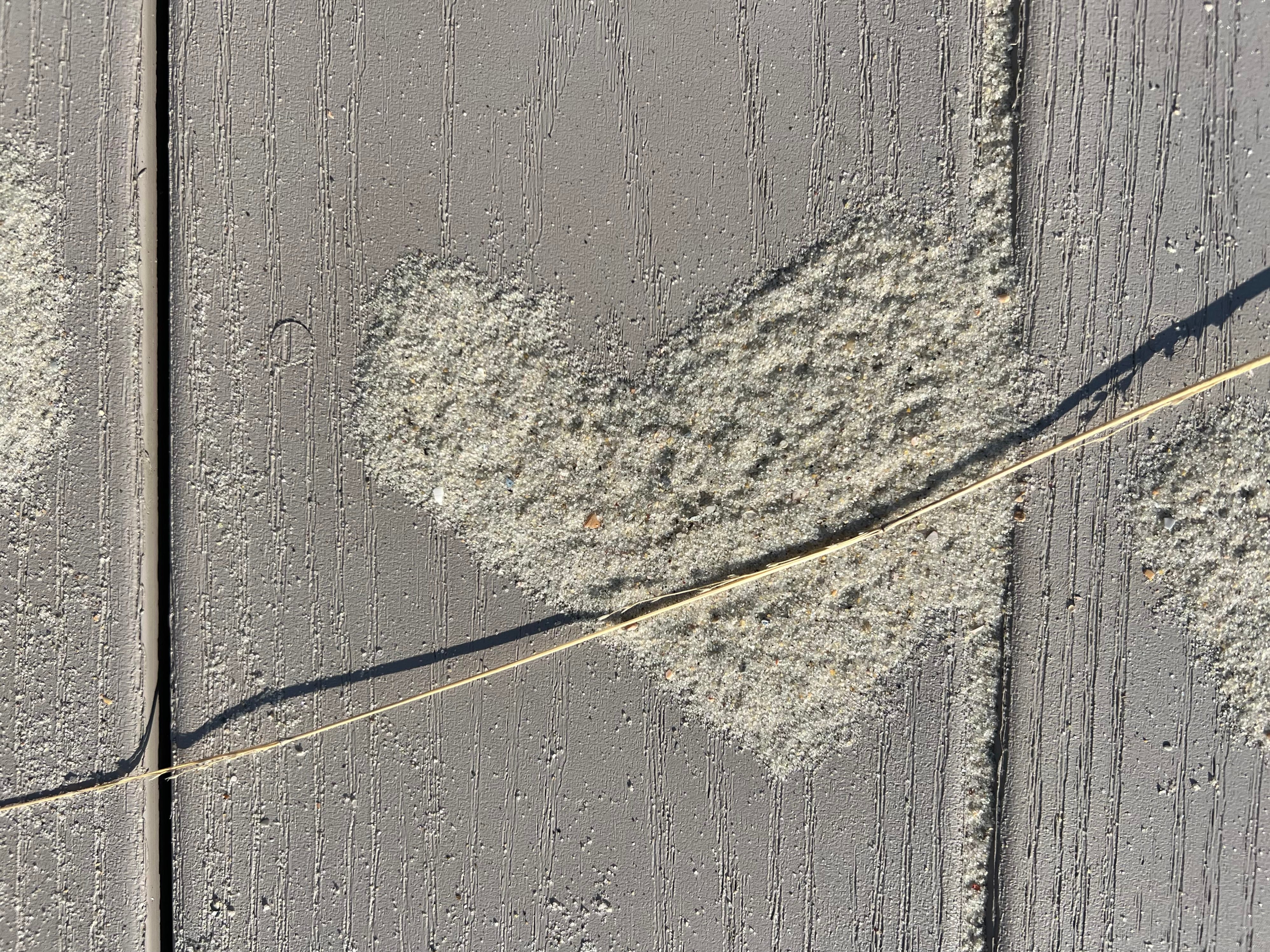
With my dad’s death, our move to the coast and leaving behind our house in Clayton and Dad’s house near Asheville, where I spent a good chunk of the past four years, I’ve been thinking a lot about landscapes and how we live in them, while we and they are always changing. Grief is a landscape, as is the world that now does not have my father in it, at least not as he was in his body. As much as Dad’s house has been an albatross and money pit, it also provided safe and cozy shelter during a very challenging time, with a lot of silence, stillness and spaciousness — hallmarks of ether and a mantra from the beach retreat. I will miss hanging out on the porch, hearing roosters, cows, dogs and, because it’s in rural Western North Carolina, occasional gunfire. (Okay, maybe I won’t miss that last one.) I will dearly miss the hummingbirds that visited every summer and the satisfaction I got from making their sugar water and comically attempting to photograph them. We’re not able to have bird feeders at the beach.
I’ll miss my friends in and near Clayton, but new relationships are blossoming at the coast. While navigating around an area that has been familiar to me as a visitor for 40 years now as a resident, I’ve appreciated driving down new-to-me streets and registering that most speed limits are no more than 35 or 45 mph — yay for slowing down, quite literally. We’re a ways away from an interstate. As my sister said about Dad’s house, there’s no rush (the fresh lawsuit makes that truly true, but whatever).
So can I let go of false urgencies? The compulsion to get through one minute to get to the next, to unpack all the boxes in one day? Can I release the thought and behavioral patterns that set me up for needless frustration? Because, like grief, actual frustrations and difficulties and pain will visit us anyway.
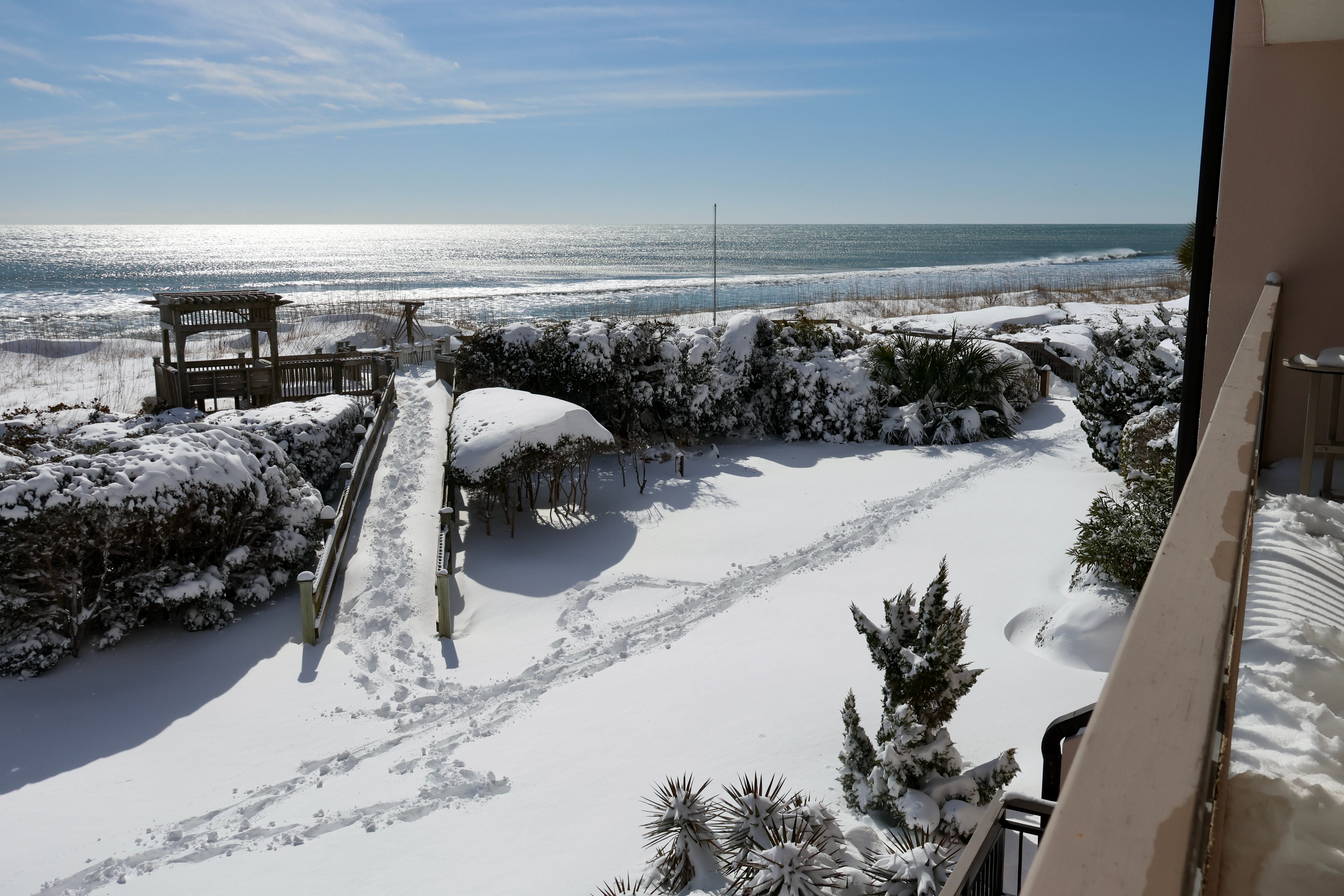
But so will unexpected delight, as in the form of snow at the beach. It doesn’t even snow much in the N.C. mountains anymore, but at the coast we received about a foot of fine, powdery fairy dust on the last weekend in January. It snowed in often whiteout and frostbite conditions from Saturday morning till Sunday morning. A true wonderland was the result, with drifts of three to four feet deep. Fortunately we could enjoy it at our leisure and didn’t have to try to drive it in, and we never lost power.
Surprise awe also arrived in the form of this dreamy song by Beverly Glenn-Copeland. I was introduced to him by a fellow classmate in an Ayurveda course a few years ago, and this timely piece more recently via Satya Robyn, leader of several online writing courses I took more than a decade ago.
I know I don’t have time to lose
I wonder if I really have time to choose
I barely have time to shed a tear
I hardly have time to shake the fearAnd the body says “Remember you gotta breathe”
The body says “Take the time to grieve”
The mind says “Let the silence flow”
The mind says “Allow yourself to grow”
In the moments after Dad died, I think while still at his bedside, I half-jokingly said, “What am I going to worry about now?” I’d been so wrapped up for so long in his care and overseeing those caring for him (a whole job unto itself), from a distance of 250 miles away unless I was there, that my nervous system wasn’t sure what to do about the sudden change in status. It will take time to unravel that pattern, and others, as the level of my exhaustion has taught me so far in 2026.
In a recent newsletter, noted Ayurveda doctor and teacher Robert Svoboda acknowledged current events and the state of the world, saying:
As we enter 2026, the commitment is simple but not easy: to remain awake without becoming overwhelmed, engaged without becoming entangled, serious without becoming grim. To keep our feet on the ground while the ground itself feels less stable. To remember that attention is a finite resource, and where we place it shapes not only how we see the world, but who we become inside it.
This calmed me down. It’s timely wisdom for any time.
Speaking of attention, now that some time-space has opened up — I’ve been dealing with the cranky effects of a shoulder injury sustained about 25 years ago. I’ve received all kinds of bodywork for it over the years and had an MRI in 2019 after carrying a heavy backpack during a vacation caused it to spike into agony territory. There is evidence of a previously torn labrum (just like I had in both hips — yay?) and arthritis at the acromioclavicular or AC joint. Nothing I do or have other people do for me is making the pain go away completely, or down to a tolerable level, so I saw a new-to-me orthopedist who recommended a cortisone shot. I agreed and consented, watching as the ultrasound-guided needle was inserted into the relatively small joint space between the collarbone and acromion of the shoulder blade — which was fascinating until a sharp, hot, knifelike sensation settled in toward the end of the injection and I nearly blurted out another F-word. I did as the assistant suggested, puffily breathing through it. I’ll start PT for it in a few weeks, so stay tuned.
Grief is stabby like that. After my mom died a friend gently noted to be on the lookout for the firsts of the first post-death year — anniversaries, birthdays and such. I went to a yoga class two days after Dad died for sanctuary and release, where nobody knew what had happened, and to be told what to do for a while. (Decision fatigue is real.) Near the end of class, in a quiet moment with the lights off, I was thinking of how afterward I’d normally go get lunch and then go visit Dad — that was my routine. But nope. Not that day, not ever again. My heart contracted. Back at the beach as I’ve visited places that Dad and I enjoyed scoping out for bird photography, I’ve had similar experiences. He’s there-not there. Here not-here. Major patterns have been not just disrupted but ruptured.
My body is unraveling, healing and decaying toward my own death, all at the same time. How cool and terrifying! There’s nothing like a parental death to bring you face-to-face with your own mortality, but also, in time, with joy, beauty and magic. It’s been more than two months since I’ve written in here, and I thought I’d be sharing details from Dad’s last days and the funeral, and I still might circle back to all that. But this is where I am now, in the space I’m inhabiting, with the past and future also swirling around me, around us, all the time.
Leslie, what a gorgeous piece of writing, both meditative and challenging. I am haunted by that question of "can I let go of false urgencies?" and hope to write to that prompt today. Thank you for your observations about life and death, grief and gratitude.
"Our stuff isn’t who we are, but the things we acquire and create do live on after we’re gone. To what degree do such items shape our identity and give our lives meaning and enjoyment? What happens with all we receive and what we contribute? What shapes a legacy? Who’s going to deal with our stuff after we die? What do we want to leave them with?"
Love these questions. I started a Substack draft about "stuff," "sparking joy," etc., but lost the emotional thread. Perhaps I will ponder these questions, write the answers, and finish the draft. Thank you. :)