
Making meaning
Webs of connection
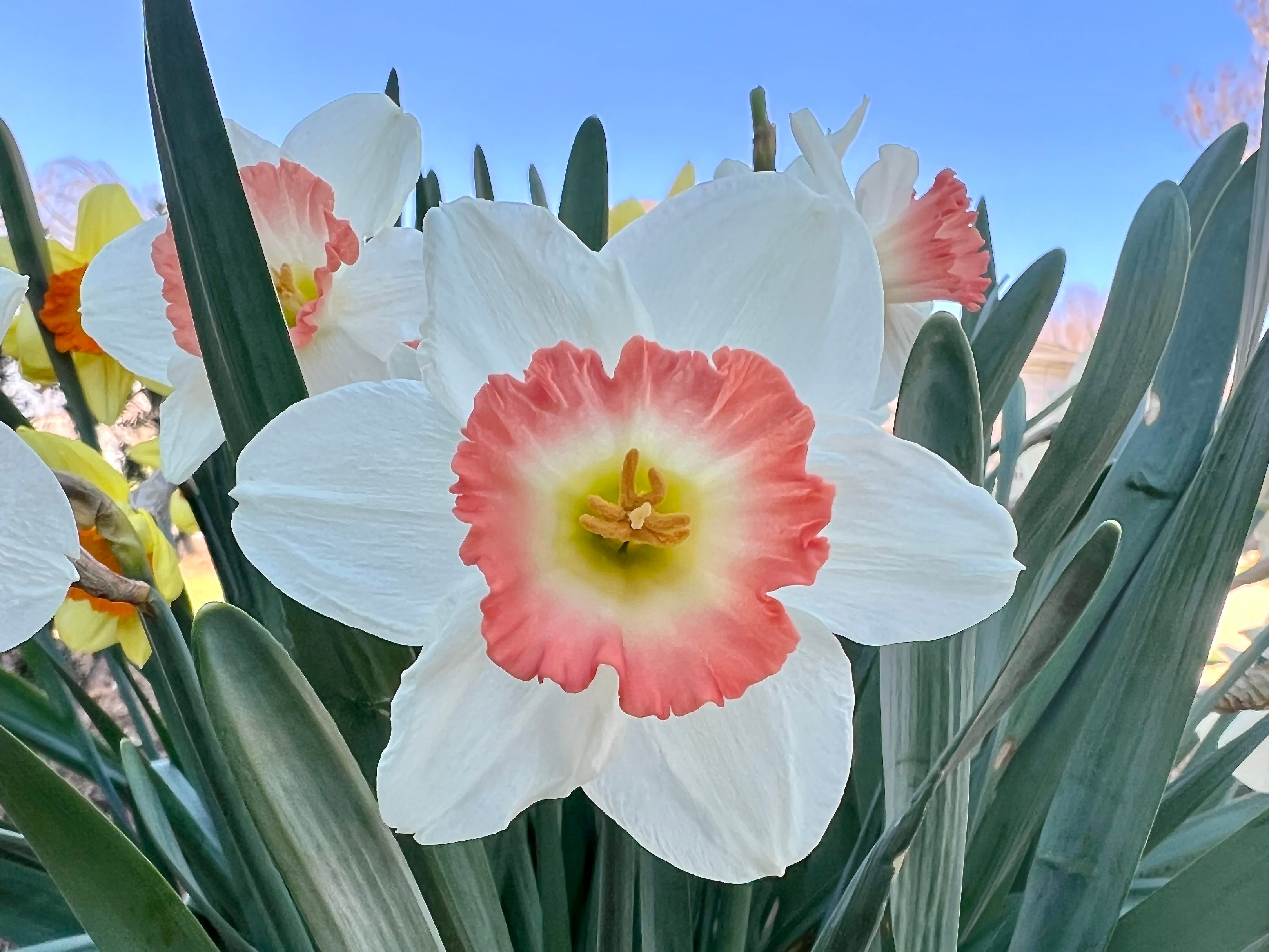
Hello! Happy April, the first full month of spring, in the northern half of the globe. There’s something about being out of a transitional month that feels good, as if April opens up a space in which to ground and hold the rapid and often turbulent changes that come with this new season of growth and rebirth.
I don’t agree that it’s the “cruellest month,” as T.S. Eliot wrote in “The Waste Land,” but I think I get what he means, with its both-and way of
breeding
Lilacs out of the dead land, mixing
Memory and desire, stirring
Dull roots with spring rain.
A few weeks ago I cut the grass for the first time this year, a task that satisfies my OCD tendencies but also feels murderous. Then after a surge of days in the 80s, we turned the heat back on for a cool spell.
I’ve watched our large backyard swamp white oak go through its blossoming phases, from shedding chartreuse blankets of pollen to sprouting leaves and shedding plant parts I can’t name that beg to be swept (multiple times) off the back deck, steps and path to the driveway.
There is probably a paint swatch and name for every shade of green that’s filling the branches of all the trees held by winter’s “dead land.”
April is, as perhaps Eliot would salute, also National Poetry Month as celebrated by the Academy of American Poets. In my last post I shared a poem I wrote in response to a favorite painting by Claude Monet at the N.C. Museum of Art in Raleigh. I’ve continued the poem-a-day practice I started March 17 and joined an online prompt course for April curated by Ellen Rowland, whom I “met” in the ether through James Crews. She’s lovely, and her daily prompts have been creative and provocative.
It’s been interesting to watch how my recent forays into painting have steered me into a more serious or at least consistent and dedicated poetry practice. All artistic endeavors share common aspects, but I was especially struck by the editing aspect I played with for Ellen’s April 10 prompt.
I’ve noted before how grief-stricken I felt while watching artists repeatedly paint over their work in sketchbooks during an online course I took earlier this year. For some reason that intuitive editing process felt more gutting with paint than with words, but — I am a copy editor. Hacking and slashing, with as much gentleness as I can muster, and toning and shaping stories, are all literally aspects of my job — with other people’s work, though, as are fact-checking, making changes to conform with house style rules, and noting major changes and questions for writers.
But self-editing is more of a closed circuit. When I’ve taught writing I’ve emphasized how the daily prompt-writing practice that I followed for years taught me much about the power of witness consciousness. We can become our own empathetic listeners, compassionate, hand-holding friends and mirroring, neutral confidants through free-writing — that is, when we allow ourselves to let our pens or keyboards make space for whatever wants to come out.
So it was interesting to do all that for myself with Ellen’s assignment to play with the concept of yobitsugi, a mosaic-style approach to creativity. It is a cousin of kintsugi, the Japanese art of reassembling broken pottery with seams of gold. As explained here:
Yobitsugi is a contemporary style of kintsugi ceramic and glass repair. “Yobi” means to call and “tsugi” means to connect. Rather than only using pieces from the original ceramic object, yobitsugi incorporates foreign pieces from other objects to create something beautiful and “new.”
Here is how Ellen directed us:
Look through your poems that need editing, pieces from the past that you haven’t revisited in a while or even lines from journal entries that stand out to you. Perhaps you’re working on a poem at the moment and you’re feeling stuck because it’s missing something. “Call” and “connect” those fragments together in a document — or literally cut them out and lay them on the table. Now piece them back together like a patchwork or a puzzle to form a new poem. You can rework the lines, shaving or sculpting the edges to fit with another broken line. Your words, rearranged and reimagined.
Then stand back and admire what you’ve created from something you might otherwise have thrown away.
Just the act of diving back into stuff I’d written years ago filled me with … yuck. What would I find in that basement of past attempts? Would I encounter mawkishness and teenage-level journal vomit (not that there’s anything wrong with that)?
I ran across two poems that fit together, which made sense, because one was a reworking of another. I could see, with the distance of time and a greater separation from the emotions under the pieces, what needed to be done. I’m not saying the result is an example of craft mastery — I’m still pretty close to the story in it — but I was pleased at the yobitsugi result. Here it is (I’ll spare you the two source poems):
•••
A Good Patient
Poked, pricked and squeezed.
Weighed, invaded and measured.
I am ill with something
that can’t be seen on an X-ray.
The lead apron presses
shame into my bones.
My labs come back negative,
which is a good thing,
but nothing is right.
Under the fluorescent lights
of endless exam rooms,
I am exposed but invisible.
No one is looking in the right places
or asking me the right questions.
The first doctors get bored
and shrug me off,
as if my malaise is contagious,
so they graduate me to specialists.
I’m underachieving in wellness
and overachieving in mystery.
We are all testing each other.
I’m failing as a patient.
I can’t get sick enough to please anyone.
But I’m a good student.
I’ll learn.
•••
Some phrases were directly copied and repeated; others are brand-new, including “We are all testing each other.” In the process of mentally cutting and pasting this new thing together from two old things, I couldn’t help but think back on the video of painters hacking and slashing through their notebooks with different tools, colors of acrylics and, in some cases, collage items. It felt as if I’d done much the same with this poem, such that 1 + 1 = 3.
I could tell you more about the story behind the now-new poem, but I’m curious about how it lands for you. It’s okay if you don’t like it or it’s not for you, but what I’m hoping for is that it feels like a complete piece and can stand on its own for another reader. Do feel free to let me know in the comments section. Try your hand at a yobitsugi poem or other creation.
To circle back a bit, the poem I wrote in response to the beloved Monet was, as a friend pointed out, an example of ekphrasis — a written work created in response to a visual piece of art. In the Write From Your Heart newsletters I wrote from 2019 to 2024, I usually included a few photos in each edition and periodically sent out versions that were photos only, for readers’ ekphrastic pleasure and practice.
Fast-forward to this past weekend, when I attended a two-hour workshop at the art museum with North Carolina’s poet laureate since 2018, Jaki Shelton Green. I think I first met Jaki at a workshop in 2016. She’s a force of nature and creativity, a masterful poet and gem of a human being.
The last time I studied with her in person was in November 2017 on Ocracoke, a remote island off the N.C. coast accessible only by air or water. I had arrived by ferry for the multi-day retreat on Wednesday, Nov. 8. My mom, who’d had COPD for a decade-plus at that point and was getting hospice care at home, had been having an especially rough time that week, and there had been talk for a while of trying to get her into a hospice facility, at least as a temporary respite for her and my caregiving dad. Long story short, Dad texted Thursday morning, the first day of the poetry retreat, to say that efforts were underway to take mom to a facility as soon as possible.
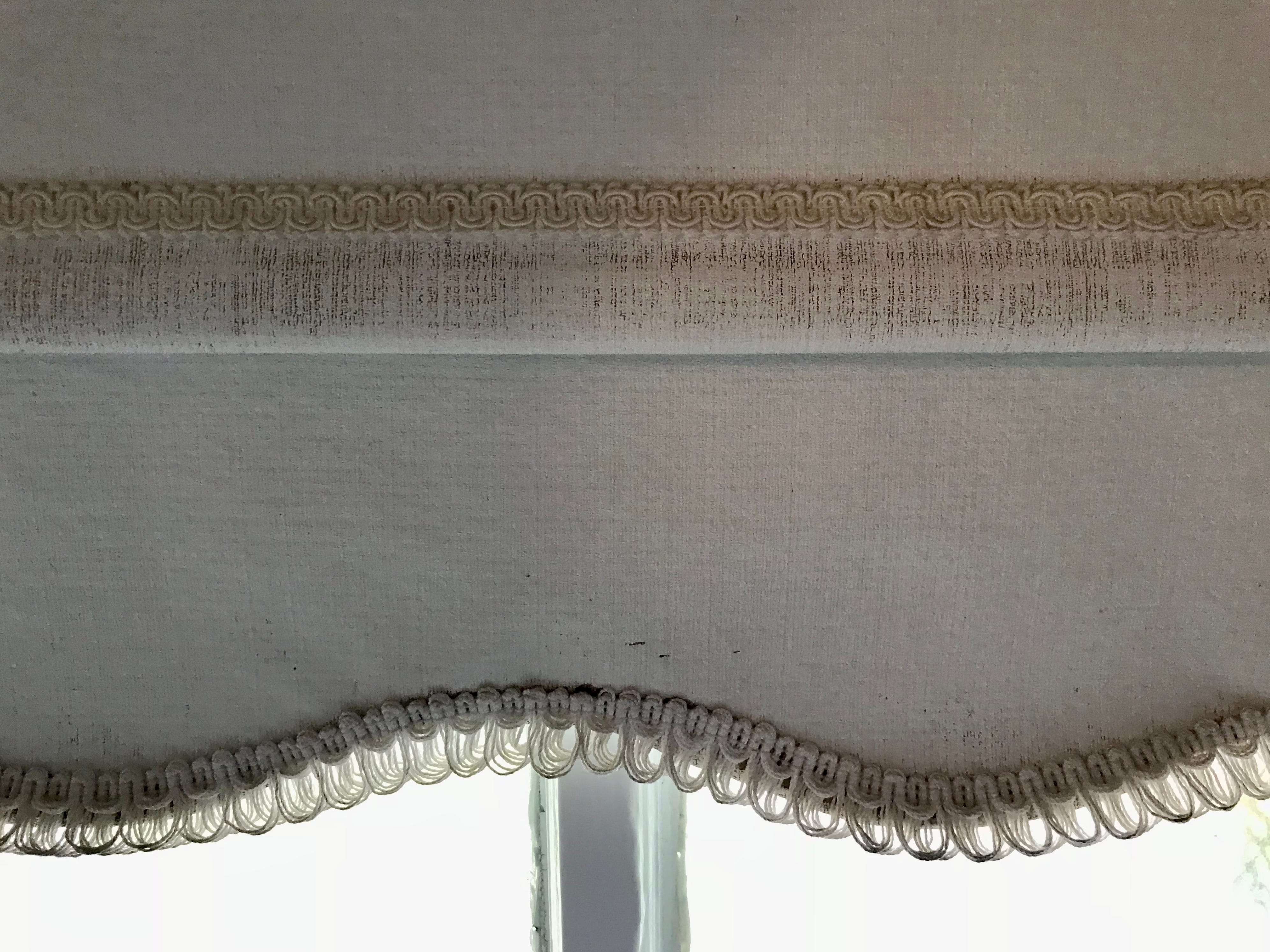
This mildewy window shade in my room at the Ocracoke B&B caught my eye, as it was like the ones we had in the house I grew up in near Asheville. This was a timely if stark and well-worn reminder of my main childhood home, which is just a few miles from where my parents then lived, while my heart was being torn to pieces 500 miles away.
I could write poems, and maybe I will someday, from the texts that were traded among family members in those few intense days. Dad said one nurse was “Very honest Advised me to hope for the best & expect the worst.” I said, “Sounds like I need to come home.” Dad would never have asked me to do so outright, and I’m sure he was in shock and processing the trauma unfolding for himself and his wife of nearly 52 years. He also wanted me to make my own decision. He said:
There’s not much anyone can do at this point and we just don’t know what’s going to happen
and
I don’t want to sound dramatic about the situation but she could also rebound
Fun, disturbing fact: Apparently old texts can be easily searched for and retrieved, even through subsequent iPhones. Land mines or gold mines?
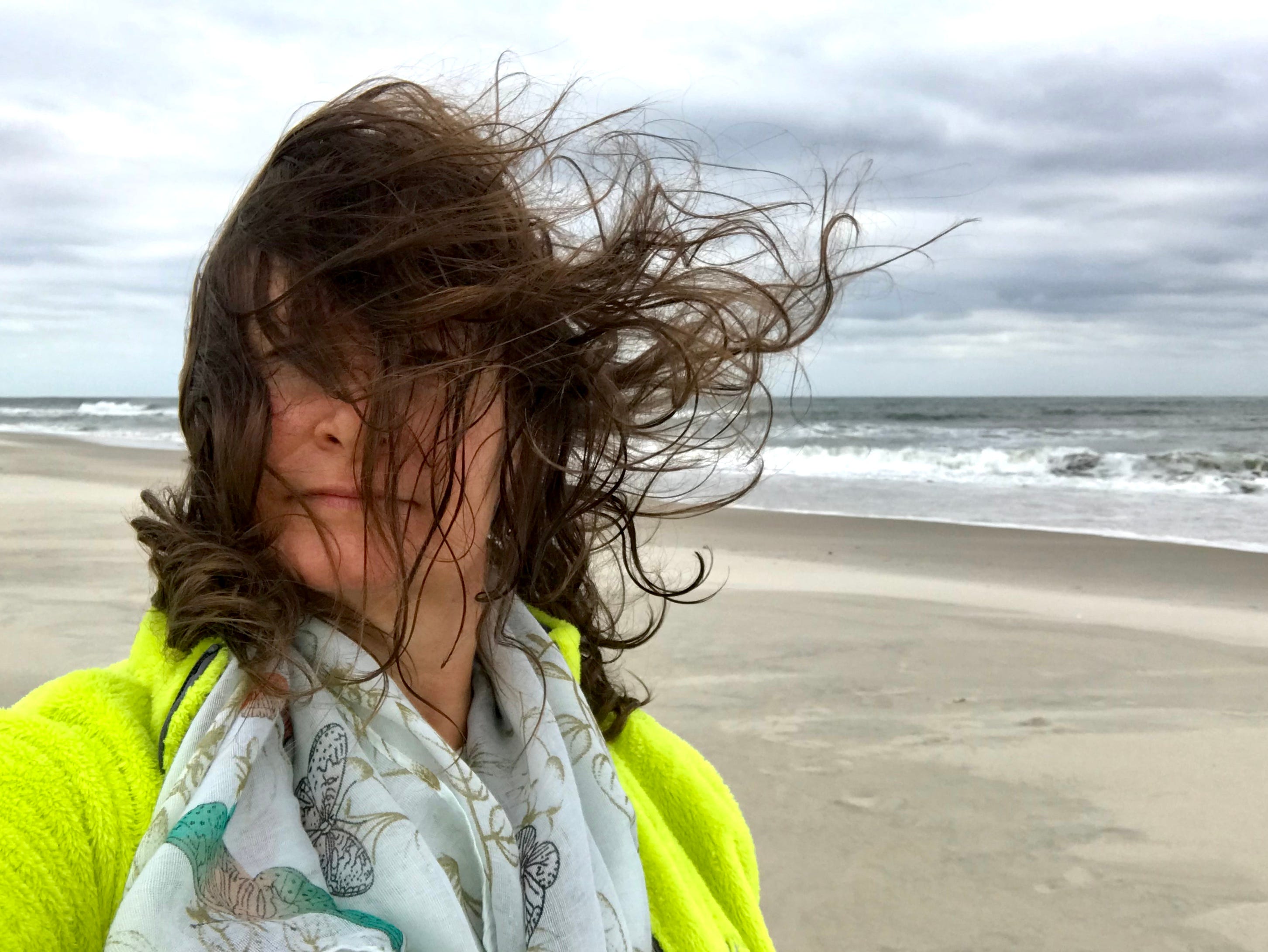
Below is a selfie I took a few hours before leaving Ocracoke, very much wanting to give it, and the world, a middle finger. Or two. It seemed a little obscene to be focusing on myself at the time, but I also wanted a record of the moment of sorts. “Hi. I’m Leslie. I’m about as far away from home as I can be right now and still be in the same state as my mom, and I think she might be dying. Will I get there in time?”
Should I have never gone to the retreat? Where do I put the guilt over having gone east from Clayton that week instead of west?
I left the island by ferry the afternoon of Nov. 9, embarking on a two-day journey across the state to Asheville. Mom was taken to the hospice on the morning of Nov. 10. Matthew drove over that day. I arrived the next morning. Other family members filed in, too. Mom died in the early moments of Nov. 13. So, it wasn’t a temporary respite stop. Or maybe it was the ultimate one? I’m grateful for those last 36 hours with her.
Anyway, my relationship to Ocracoke is shaky, having also suffered an atrocious bout of seasickness on a sailing trip there a few years before this all happened, but my regard for Jaki remained high, though over the years our schedules were unaligned. So I jumped on the chance to take the April 12 workshop, which focused on ekphrastic responses to a newly installed exhibit by painter Grace Hartigan — and how could I resist the title of the show? “The Gift of Attention.”
Hartigan worked (in the 1950s and ’60s, anyway) in a mix of figurative and abstract styles, and — fascinatingly — in collaboration with and response to poets, in a kind of reverse-ekphrastic process. Talk about a trippy confluence of meaning-making for the workshop. For the artist, a museum note said,
poems were “fuel” for her creativity and among her “deepest inspirations” in composing pictures with multiple meanings.
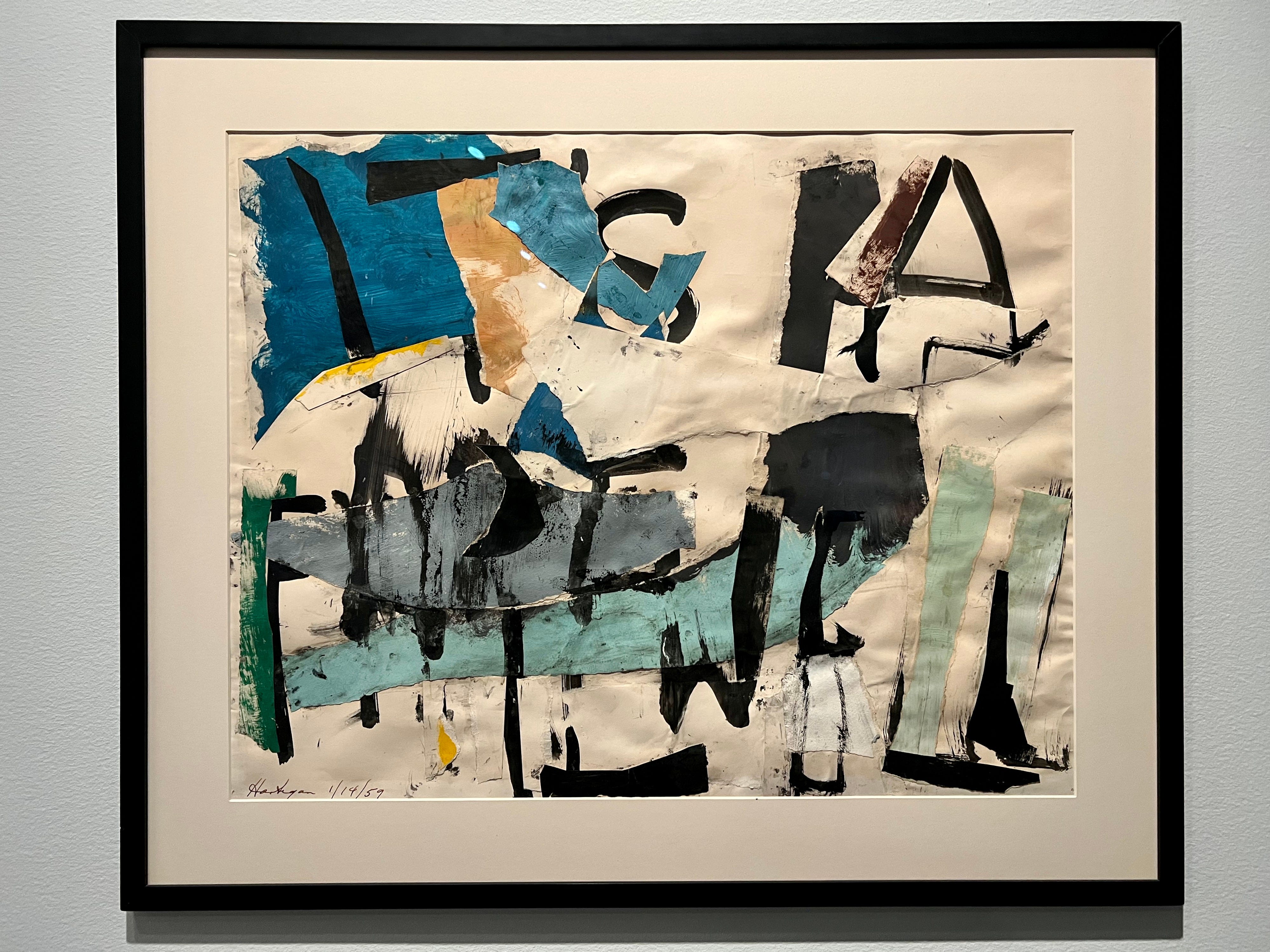
I wrote to two of Hartigan’s works, and shared my response to a mixed-media piece from 1959 called “It’s a Farewell” (below). It’s a collage of paint and torn paper made as a gift for a male couple who were about to embark on a long trip to Europe. (I love the echo of “gift” from the exhibit title.)
Up close it’s hard to make out the title’s words, but can you see them in the photo? As with the distance I appreciated from my two old poems about illness, I was struck by how, with the farewell title in mind, I could see it from afar in the layers of the media Hartigan chose.
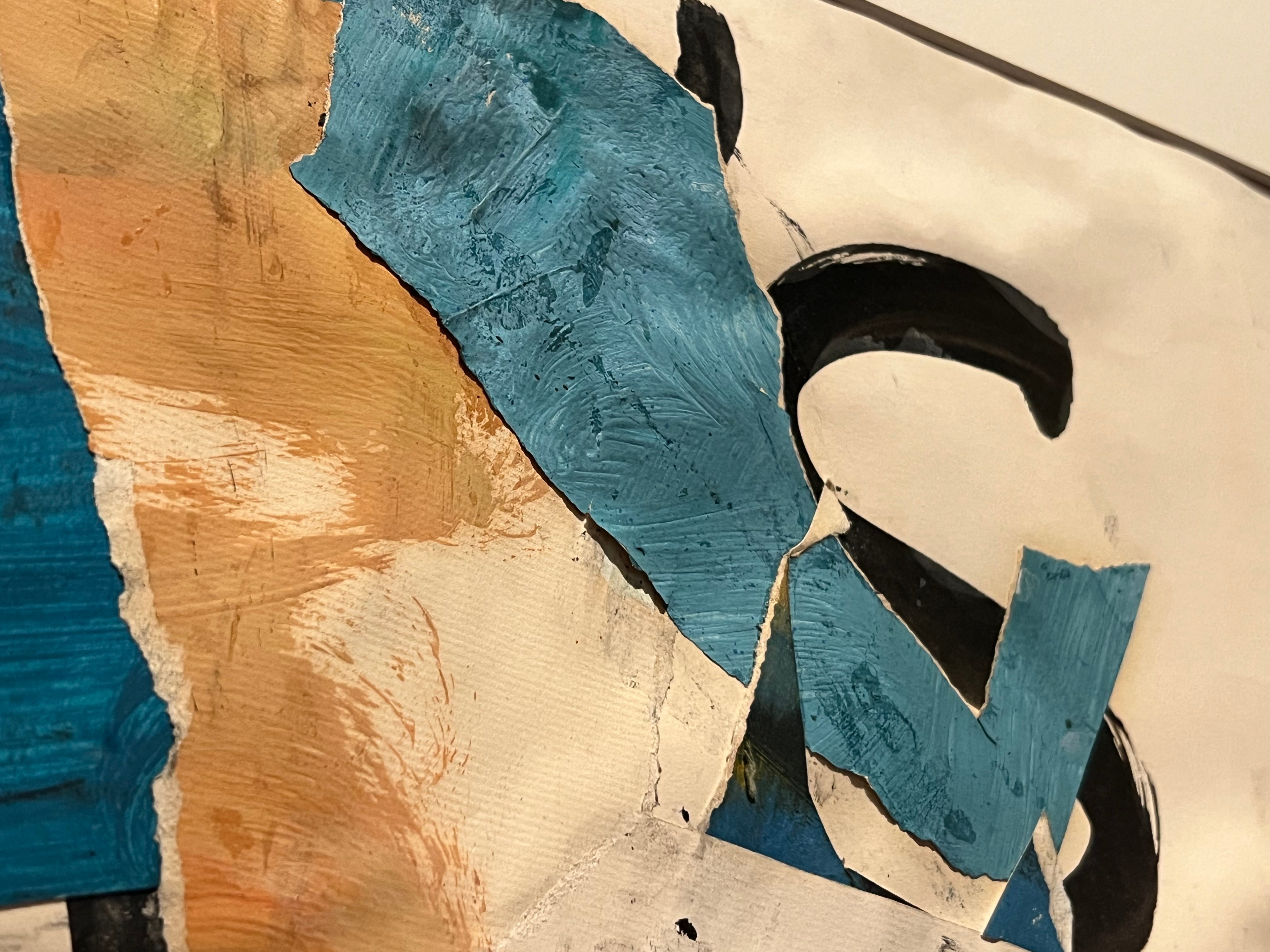
Here is my rough, first-pass poem, with the title courtesy of Jaki:
•••
The Color of Goodbye
My legs have feathers
as I move through this
message — buried under
layers of paint and paper,
trying to reach you with
a goodbye — what did we
buy from each other that
was good, what are we
leaving behind as I wish
you farewell?
Your welfare has been my
chief concern but it has
torn me to pieces. I am
still upright, a hectic mess
of blues and greens in
a sea of grief for what
we never were.
•••
Maybe it stands on its own absent any reference to the painting, or maybe it needs edits to get there. Regardless, I read this to my fellow workshop attendees at the museum. As I wrote it, I tried to leave behind the story given with the piece and enter my own. It ended up being about an unhealthy relationship I had in college, but grief is grief, so it’s entirely possible that with Ocracoke and my mom on my mind by way of Jaki, my subconscious was trying to weave together multiple layers of meaning. With guidance on craft, perhaps I could elevate it. Or not.
If you have any responses to it, feel free to share in the comments section. And of course, you can write to the painting yourself.
I’m endlessly fascinated by how we make meaning of our experiences and those of others, to the degree we’re part of or invited into them. I was grateful to have spent time again with Jaki and to have been led by a trusted heart into my own creative territory.
I didn’t really write poems around the time my mom was dying — her illness and decline were too close, too raw and real. But as with my reworked yobitsugi poem, maybe there will be a time and place in the future in which to revisit recovered artifacts and memories from that horrible era.
A sweet museum employee who helped facilitate Jaki’s workshop chimed in after several of us attendees had read our poems. He emphasized the importance of making and sharing art, always but also almost as a subversive act nowadays, when so much in culture and society is under attack, including language (see, in the U.S., for example: politically motivated edicts on “diversity, equity and inclusion”). In some ways, art always occupies a subversive space.
I love this quote from Anaïs Nin:
All of my creation is an effort to weave a web of connection with the world: I am always weaving it because it was once broken.
Note the echoes of kintsugi and yobitsugi, and the Hebrew concept of tikkun olam, which means “to repair the world.”
But whether what we create ends up being offered publicly or not, the point is to figure out what’s ours to make and offer, because no one else can (or should) make those decisions for us, and no one else can make and offer what we can.
But community is also vital, and we humans influence each other probably more than we realize. Every time I write and read with others, I’m reminded of the power of sharing stories and of how much we all have in common, though the details and circumstances of our situations vary.
I’ve been buoyed by this month’s virtual class with Ellen, which comes with weekly group Zooms, and the time with Jaki and other folks searching for ways to feed the world with more meaning, beauty and joy.
What are your offerings, if even just for yourself? What uplifts you?