
A little more time
But for what?
Hello again. Thanks so much for the heartfelt comments on the last post. I appreciate if anyone reads what I put Out There and also takes the time to share feedback and personal experiences. To backtrack a bit …
My dad’s death was a slow march, like the journey a group of monks embarked on in the Southeastern U.S. recently, but different. Each of those quests, however, was about the pursuit of peace — along each respective route, step by step, and for the post-trek ever-after. My sister and I tried to make our 82-year-old father’s inevitable passing as tranquil as possible, for him and ourselves. We did our best to respect his wishes while he was under hospice care in his nursing home from Nov. 14 until the day he died, Dec. 10. He spent most of that time asleep. He lost his appetite for food, shunning even the favorite snacks regularly supplied by my sister of Oreos and Trader Joe’s gingersnaps and a daily Coke Zero — a sure sign of a serious turn and withdrawal. He enjoyed countless Popsicles, though, so it was a treat for us to be able to provide him with some frozen joy on a stick.
During those 26 days, I sat with him as much as I could, trying to be a good daughter, whatever that meant, and model whatever flavor of presence served him best. But what did I know? Hardly anything. So, in typical fashion, I read books while he snoozed. A friend in Scotland (thanks, Mary!) who had seen my Substack post from Nov. 25 suggested “With the End in Mind: Dying, Death, and Wisdom in an Age of Denial” by Kathryn Mannix, a British physician who specializes in palliative care and cognitive behavioral therapy. It seemed a bit too on the nose, but I can’t recommend it highly enough. It offers searing insights into the dying process when it is relatively slow and telegraphed in neon. Many of the cases involve cancer, which was not my dad’s situation, but a lot of what Mannix describes mirrored what Dad and we as a family experienced. There’s a direct line to and an evolution in her work of the legacy of Elisabeth Kübler-Ross.
[Media sidebar: Another profound read was the memoir “The Choice: Embrace the Possible” by Holocaust survivor Edith Eva Eger. Two documentaries I watched after Dad entered hospice were also timely, last year’s now-Oscar nominated “Come See Me in the Good Light,” about poet Andrea Gibson’s experience with terminal cancer and their relationship with their wife, Megan Falley; and “Captain Scott B. and the Great Adventure,” a really dear chronicle by my friend Betsy Bertram about her experience of her father’s death. Last but not least, I discovered the podcast “You’re Going to Die,” which is remarkable. There are episodes with Andrea and Megan, and other great ones. I have also read several mind-candy romances, too. Don’t worry.]
In one chapter in “With the End in Mind,” Mannix notes how moved she was by a man who compared a slow, observed death to a normal childbirth, in cases when assembled loved ones of the mother discuss the trajectory of contractions, dilation, the baby’s position — “And this is the same, innit? We’re all comparing progress, waiting for the same thing.”
Mannix said:
This “family’s eye view” of the parallel experiences at both ends of life was a great gift that has resonated with me repeatedly throughout my career, and I treasure it still.
This analogy was a gift to me as well. After my mom died I felt as if part of me had died as well, been stripped raw and reborn. I wondered, Who are we when the people who brought us into the world start to leave it? Although her death at 73 in 2017 was not a surprise and, I hope, gave her everlasting solace in place of years of suffering from COPD, the reality of the absence was horrible. The price of peace was her disappearance. In late middle age, I began to question my identity. What died was the earthly relationship and connection we’d had, which of course had begun in her womb. It felt as if the umbilical cord that had been cut in 1967 had been severed all over again. I felt untethered and physiologically altered in ways I was wholly unprepared for, as if a layer of skin had been ripped off. It was the natural order of things for her to die before I will, but that didn’t make it easy or, frankly, on any level acceptable. It forever changed me.
Dad’s death has, too, but in ways I’m still unfurling. In the first few days after he died, my sister and I bumbled around like pinballs. We missed some cues at the ritual-heavy Episcopal funeral — Go up for communion now? Yes? No? Uh, whoops, no, not yet — which, being seated in the front row, was tragicomic. We’re not churchgoers, let’s just say, and with no grown-up to guide us through the post-death process, we also floated through communicating with the mortuary in a timely manner and filling out the right forms for the cremation process. After a few fraught phone calls to ensure the ashes would be ready for the funeral, I picked up Dad-in-a-Box on the morning of the service, nine days after he’d died, which cut it wayyyy too close for me. But whew.
Heather and I chalked it all up to being freshly parentless. We’re claiming orphan status, even though culturally it seems acceptable to use that word only for young children. It was as if a lid to our existence had been ripped off, and indeed, one definition of “orphan” is “one deprived of some protection or advantage.” Becoming alone in the world in that way as a young person is surely a devastating occurrence like no other, but it’s not any fun as a grown-up, either. I craved a death director in the way I’d had a wedding planner. How could family members be expected to think clearly at such a time? And yet billions of people have been through the same baptism and survived, often under tragic circumstances.
In some spiritual and therapeutic hallways it’s said that we can and should learn to parent ourselves. We can, at any adult age, give ourselves the undivided and unconditional love and attention that is specific to a (healthy) parent-child relationship. This is all well and good in the abstract, like so much of the yoga philosophy I’ve imbibed in the past few decades, including the concept of abhinivesha — the fear of death, or of loss in general. In reality, it’s often hard to put abstract balms into practice.
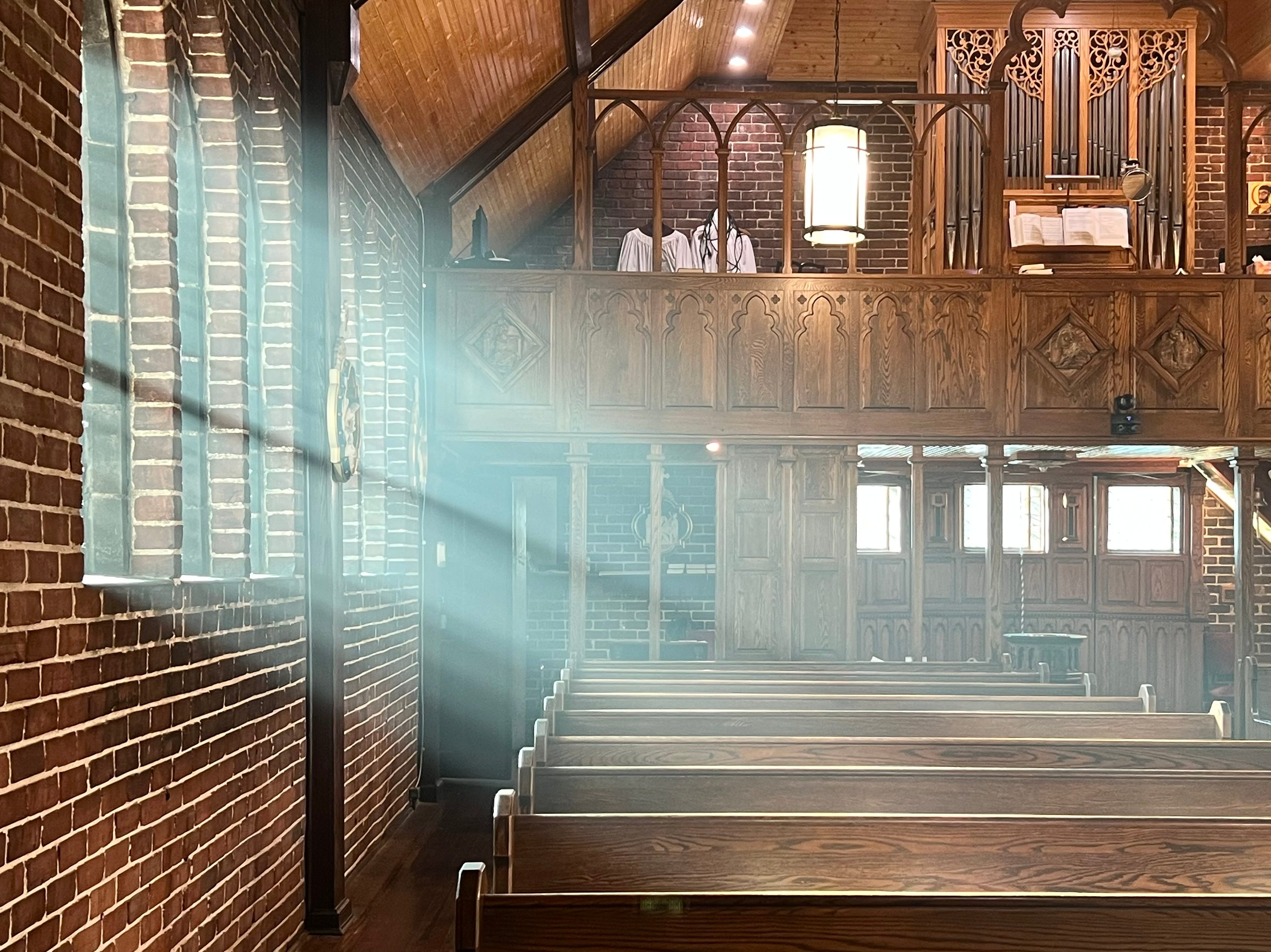
After Dad’s funeral, I was struck by how the sunlight illuminated the incense-filled air in the empty nave, in the silence that followed the music-filled service he had planned years ago for the church where he’d been a deacon. I wrote in my last post about how the element of ether holds everything. This image seems to confirm that. The room had contained a community of mourners. Maybe the smoke was the residue of the mixture of grief and celebration embedded in the liturgy, a kind of remains.
In the way I felt my DNA had been rearranged after my mom died, it seemed as if I’d been re-adulted after Dad was gone. Like, Okay, the cosmic forces were saying: Who are you now? Who were your parents, the people who made you and had lives of their own? Did you know them at all? What is their legacy? How did they shape you? How did you shape them? And, by the way, this is going to happen to you one day as well, in one form or another, and at age 58, sooner rather than later.
The shape of a grief mirrors the nature of the relationship we had with the deceased. While my dad was declining, I had a sense of not wanting to squander his remaining time, but I had to let go of any fantasy of having a Hallmark Channel goodbye, of magically tying up any loose ends of what-ifs and regrets, surrounded by cherubim and seraphim. I didn’t want to make the end of his life all about me, but for my own sake I did want to let him know that he had my permission to go — not that he needed it, but that’s a thing. He was very ready and clear about wanting to “end it.” At various times, in different ways and to different people, he said: “Just let me die.”
One of my regrets was obeying him when he demanded I put his wheelchair next to his bed as I was leaving his room one evening. He was incredibly weak, having rapidly lost a few dozen pounds and a lot of muscle mass. Self-transferring was not a good idea. But I did as he asked (paging Dr. Freud!) and told him (as I had a thousand times) to seek help if he wanted to get up. At some point overnight he naturally tried to transfer himself and fell, sustaining fortunately no more than a banged-up eye. Dried blood remained on a scab on his cut cheek for days. I kicked myself and was grateful he had not been more seriously injured.
Over the course of his last four weeks, I watched as Dad became less mobile, his energy clearly flagging, his skin tone growing more sallow. Eventually he was bed-bound and dependent on nurses and CNAs for help with all the dignity-fraught things he had been doing for his fiercely independent self. The hospice social worker helped to facilitate a piercing end-of-life conversation with just a few questions that helped him (and me) clarify the path forward. As I noted in my November post, it seemed he had embarked on a sort of internal accounting. At one point, after he had voiced some regrets (“I could’ve been a better husband and father”), I said I loved him. “That’s all that matters,” he said. He noted how much he was looking forward to being reunited with Mom, his wife of one month shy of 52 years. They still talked, eight years after her death.
I asked if he believed in forgiveness. “Sometimes,” he said. In the spirit of trying to soothe him but not fix or dismiss his concerns, I shared the Hawaiian Hoʻoponopono prayer: I’m sorry. Please forgive me. Thank you. I love you. I’m not sure he bought it, but I find it helpful.
Speaking of time travel and feel-good movies, in another dramatic shift, Dad changed his TV from Hallmark to a channel featuring westerns with John Wayne and the like.
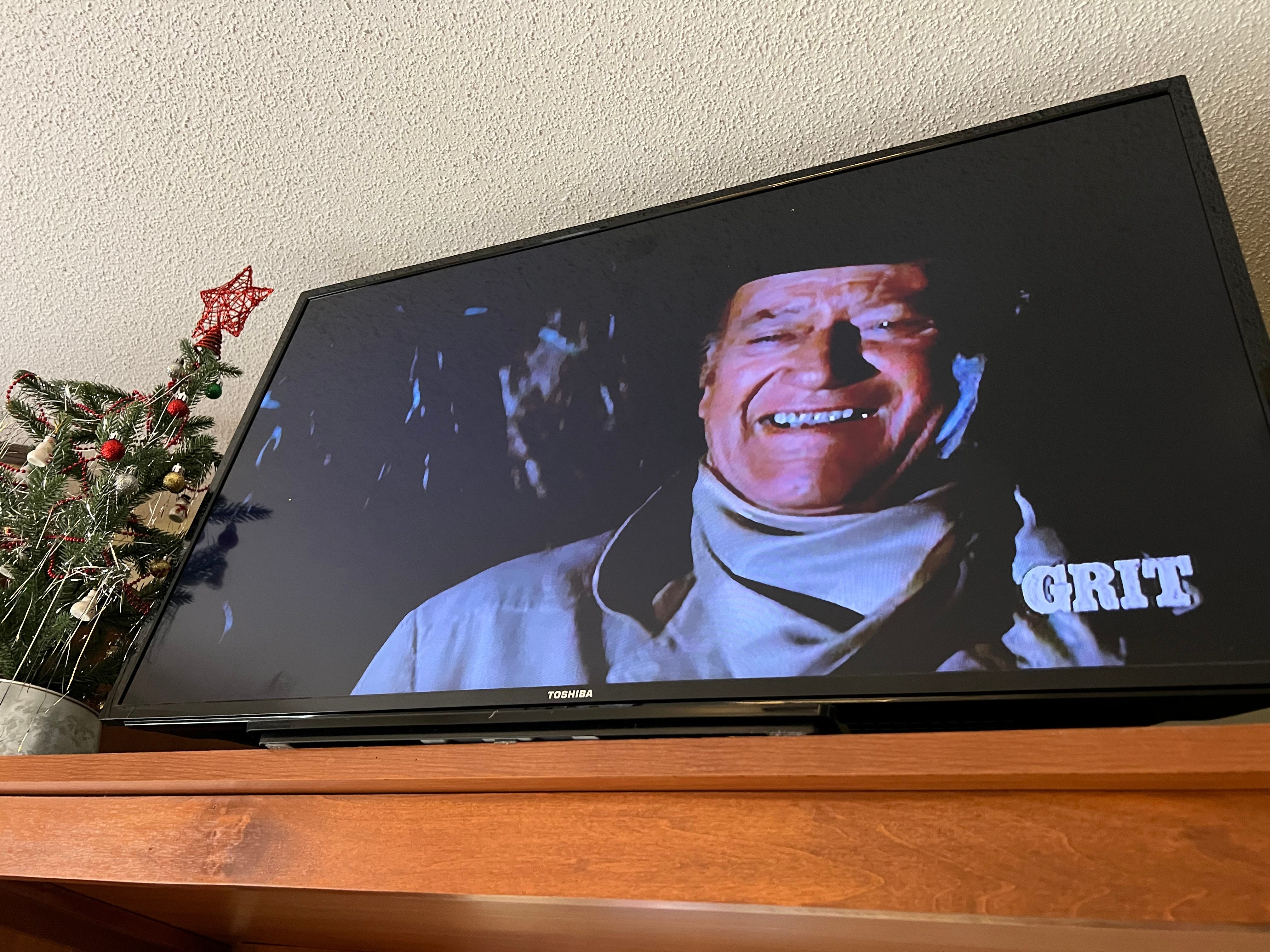
This was sweet and adorable. I asked him if he liked the tough guys; he grinned and nodded. He tried to tell me something about an actor in a stagecoach in a black-and-white film, but his speech had become more effortful and garbled, so I didn’t quite get it. He had once again grudgingly accepted my sister’s Christmas decorations (note the tree next to the TV screen), but I think he was secretly touched, even if he didn’t think he’d be alive for the holiday.
At some point while under hospice care, Dad started to receive morphine, another sign of approaching death. He was hurting from arthritis and, I suspect, neuropathy and from simply dying, as his organs and systems were shutting down. In this kind of death, the body takes over. It’s the teacher and ringmaster, and the degree to which the dying person and their people accede to this process counts for a whole lot. Why would we not want a body and soul to have as peaceful a release as possible?
There were a few disturbing narcotic-fueled moments, however, such as when I pulled out whichever book I was going to read for when he dozed off later and he said, “Put your book away, we’re going home!” Uh, no. No, we are not. As I recall, I deflected this heart-punch with turning his attention to lunch, as if he were a toddler (back to the comparison to childbirth and tending a new life). “Here, have some mashed potatoes!” He was so clear about it, though, and of course returning home had been a goal for the first several months he was in the nursing home that became a fantasy. He had once told my sister and me about nursing homes: “If you put me in one of those places, I’ll haunt you forever.” I will always live with a helping of guilt and regret that he ended up in a skilled nursing facility, but that’s absolutely where he needed to be. He knew it but didn’t want it to be true.
After picking up his ashes, we had enough time before the funeral to take him — the box that contained his cremains — back to his house, where he had not been since December 2021. I gave him, the box, a tour and let him sit on the porch and in his beloved recliner. I’d wondered if it would be too painful for him, like a kick in the teeth (as if he could feel what I was doing), but I also thought he’d get a kick out of finally going home, one last time, before being interred in the same patch of ground where Mom’s ashes were buried. Also that morning, the garage door that had broken a few days after I’d arrived in mid-November was finally fixed after several delays — parts had initially arrived broken, I put off the rescheduled visit when Dad started to decline more sharply, then one of the sweet and young installers went home ill on the next attempt. This “new” year has continued in much the same vein, for me and a lot of folks.
I was incredibly touched to see several staff members visit Dad after word got out that he was on hospice care. One physical therapist said Dad was his favorite resident, describing him as an entertaining mix of ornery and compliant. I was glad to have been around when the volunteer-escorted therapy dogs dropped by for what turned out to be the last time (I was happy to participate in the therapeutic part, too). As many issues as I’d had with care issues in the almost four years of Dad’s time in the nursing home, it was always clear to see whose heart was in the right place, in a largely thankless and difficult field. After Dad died and his body was being wheeled out to the mortuary’s van, several employees gathered in the hallway for a “code angel” to say a last goodbye and usher his exit. This was incredibly heart-stabby.
The morning of the day Dad died felt like the morning he was going to die. It was a Wednesday. Five days before, he’d had a rally, a surge of energy and clarity that is common in some end-of-life patients. He was more animated than he’d been in weeks, and I think some (delusional) part of me hoped that this state would last, that he was turning a corner. Alas, the next day he was back in the valley of certain decline.
Brother John, a Franciscan friar and good friend of Dad’s who visited him often, saw him Monday, two days before he died. He liked to sing hymns with Dad and provide communion, in a reversal of services that Dad had offered during his decade-plus of being a deacon. Brother John now uses the portable communion set that Dad had passed on to him. Monday was also the day Dad asked for the rest of his meds to be stopped — namely insulin and blood pressure drugs. “They’re what’s keeping me alive,” he said. He wasn’t entirely wrong, but my sister and I were not fans of finding out what kind of death he might face, as a Type I diabetic, without insulin. But, as the head of nursing in the facility had told us, at some point lack of insulin would not be an issue. Dad’s body was shutting down in so many ways that his glucose levels were hardly worth worrying about. A bigger intelligence was at work. Brother John told Dad that when the time came to go toward the light (not in a “Poltergeist” way, or maybe so?). At that moment, I swear, clouds on an otherwise gray day parted, and a beam of sunshine poured in through the windows next to Dad’s bed.
Dec. 10 dawned with a colorful sunrise on the first prospectively sunny day in about a week. The night before I had said goodbye to Dad as if I might not see him alive again. He seemed to be slipping into a deeper form of sleep, his face pinched in concentration or discomfort, or both.

That morning I spent some time ordering Christmas presents online for friends, not knowing how the next several days, or my state of mind, would play out. It felt good to be doing something for other people. And I was probably stalling. When I arrived in Dad’s room around 9, I could tell things had taken a turn. He was in a smock, for one thing, not his usual outfit of a T-shirt and sweatpants, which probably meant he’d thrown up again. He was essentially unconscious, no longer able to speak or communicate clearly.
But the big giveaway was his breathing. He seemed to have entered the near-death cycle of irregular, shallow-then-deep inhalations and exhalations, which has a name: Cheyne-Stokes respiration. What also has a name? The aimless grasping and picking at bedclothes or nothing at all by someone who is delirious — called carphology, from Greek roots that mean “to collect straw.” Dad had been doing this for some time but it became more noticeable near the active end. Some of what we witnessed in the last few weeks of his life had been outlined in a booklet from the hospice agency, because nature loves patterns, and, despite the uniqueness of human beings, some deaths have a lot in common. And, as you may have surmised, I do love book learnin’. But reality is its own teacher.
These words from yoga teacher Donna Farhi’s newsletter around this time were helpful:
I like to do hard things because challenging, long[-]game endeavours are interesting, satisfying and ultimately nourishing. They engage all the senses. They teach us that things not going our way is actually, more often than not “the way”; disappointments, failures, and throw-aways (like the batch of Camembert that turned blue and had to be tossed into the rubbish), are not the exception to the rule, but the norm. We learn through experimentation and investigation and discovery and making lots of mistakes. And if we take a moment to pause and reflect, sometimes, we come up with a better way.
The bolded emphasis is mine. I’m not sure about liking hard things all the time, and I often wish I could order up the degree of hard I think I can handle.
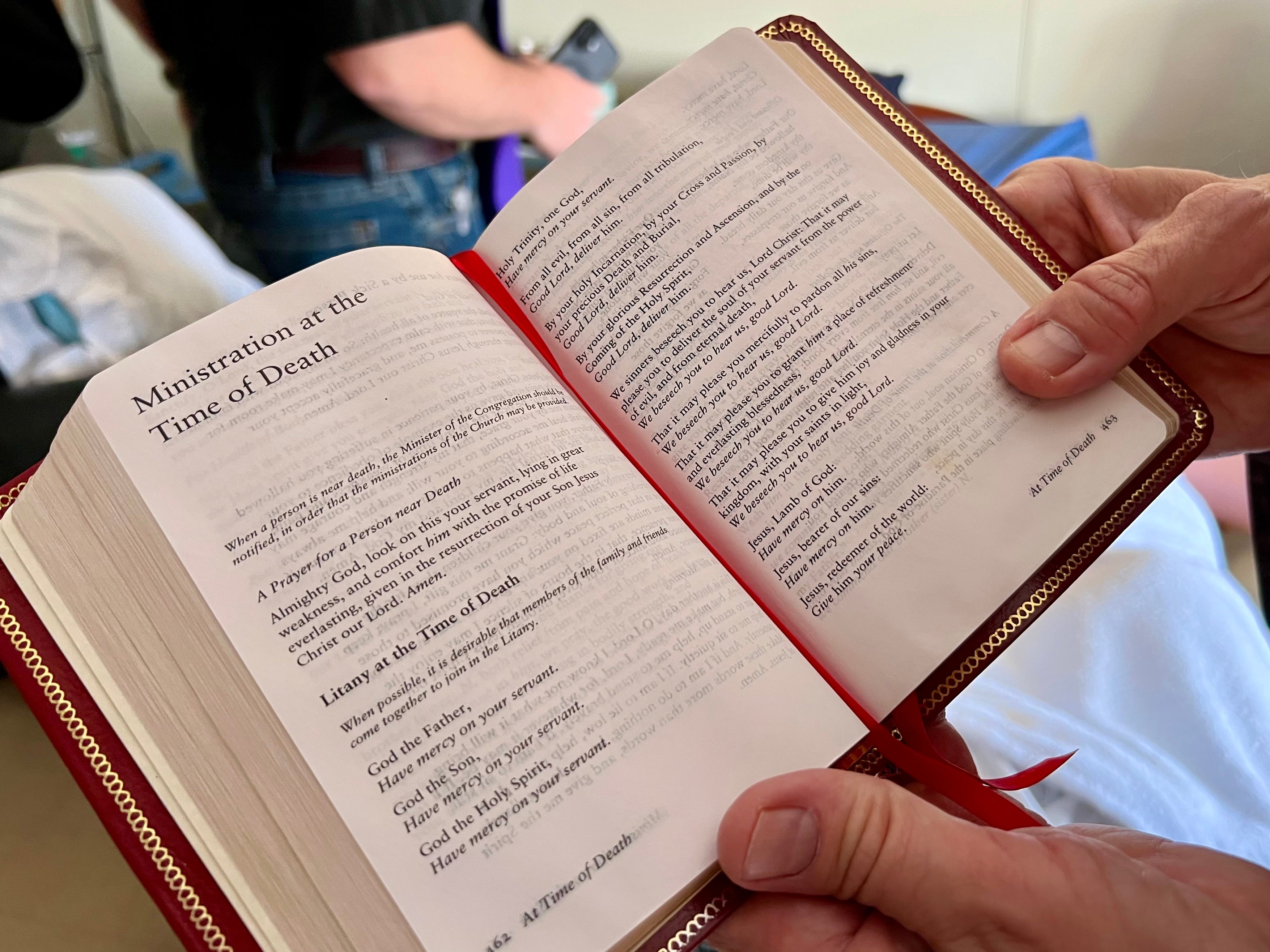
My sister and I sat on either side of Dad’s bed, talking to him and touching his bony chest and flaccid arms and cooling hands to let him know we were there. An administrator who came by to pay her respects suggested we give him water via a sponge attached to a small tube, like those used to seal envelopes. He sucked on it fairly strongly at first, like an infant with a bottle (again the comparison to childbirth), and we’d wet his lips, too. But as the morning went on, his responses became more and more feeble, and eventually nonexistent. Dad had wanted Brother John to deliver last rites when the time came, if possible, so I alerted him that I thought it was time. He and the priest from their church arrived just before 1:30 p.m. and proceeded through the brief prayers.
After they left, I took a walk around the building, under sunny, blue skies. After the third lap, something told me to go back inside. When I entered Dad’s room, I could tell his breathing had taken yet another turn — with less frequent ins and outs, and longer pauses between the outs. I looked at my sister. Matthew was with us as well. I had been in the room when my mom died but had not witnessed her last breath. At about 2:15, Dad’s chest sank and did not rise again. This timing was incredible — I feel like he knew he had been ministered to in the way he had wanted when he wanted it most.
In Dad’s newly unanimated state, it was amazing how quickly he started to not look like himself. He didn’t look asleep; his face and body looked … vacated. Matthew suggested we not rush to get anyone else in the room, which was good advice. In another instance of Divine timing, Dad’s hospice case manager reappeared about 2:45 p.m. She had checked on him in the morning and confirmed that his vitals were slipping, that the beginning of the end had probably started, but with no clear timeline. She said that while driving nearby, something told her to pop in again. Voilà. She went back out to her car for her stethoscope and made it official.
Also that day, the toilet in Dad’s bathroom that had been hissing and whining for weeks was finally fixed, with a whole new one on the way anyhow. I hope the new occupant is enjoying it. The motor for Dad’s hospice-tenure air mattress also constantly whirred, adding to a less-than-ideal deathbed ambiance (a Hallmark director allowing all this would have been fired). At some point after Dad was gone but still there, we turned it off and let it deflate — with a big whoosh that quickly lowered his body by several inches. I was not prepared for the drama of that moment. But between that and the quiet toilet, my skull stopped rattling.
The next morning at Dad’s house, the first full day of life without him in it, strong breezes blew the wind chimes on his porch into a tinkling song, a much more welcome noise. But I felt as if I’d fallen out of an orbit. The celestial body that had been my father was no longer in the tangible universe, and the caregiving and daughterly pattern I’d been in him with for the past five years, up close and from a distance, had disappeared into the ether. I had some weird thoughts in those first few days, like: Tomorrow when I wake up he’ll still be dead but he won’t die again. And: I’ll no longer be waiting for a distressing text or phone call about him.
A few days after Dad died, Brother John shared with me a dream he’d had: Dad was reunited with Mom, and together they were at a big party, dancing with other people, healthy and happy as could be, laughing and full of joy. I hope Dad was truly celebrating somewhere. I hope they both were.
I’m so glad Dad has been released from his pain and got his wishes — to die and, in his belief system, to be reunited with Mom. But in the immediate aftermath of his passing, I wanted it all back — the last month of his life, all that intense time in which very little happened except the most profound, agonizing, liberating thing. Is it possible to miss the misery, to want a certain kind of pain instead of the absence of it, which was replaced by another kind of absence? I wouldn’t want those four weeks back for Dad’s sake, of course, but selfishly, for more time and presence with the only father I’ve ever had and will ever have. There are so many ways a do-over could unfold.
Adrienne Rich says in her poem “Diving into the Wreck”:
I came to explore the wreck.
The words are purposes.
The words are maps.
I came to see the damage that was done
and the treasures that prevail.
It’s kinda like that. Damage and treasures.
And I’ve been thinking of this song by John Doe of the punk band X, which was inspired by his daughter, called “A Little More Time.”
It’s a snippet that comes to me often. A little more time. With our loved ones, what’s ever enough? I imagine I’m not alone in wanting a little more time to get it right, whatever “it” is, to do better, to understand more, to love more simply and purely. If karma is, as Ayurveda doctor and teacher Vasant Lad has said, not about “what goes around comes around” but rather “what’s unfinished returns for completion,” I’ll get another shot, or maybe a hundred.
In the meantime, I’ll remember my dad and my time with him, not just in the last month of his life but in the nearly six decades we were on this Earth together. Having now had two front-row seats to death, I’ll carry forward lessons from each experience into what remains of my life and how I want to spend it.
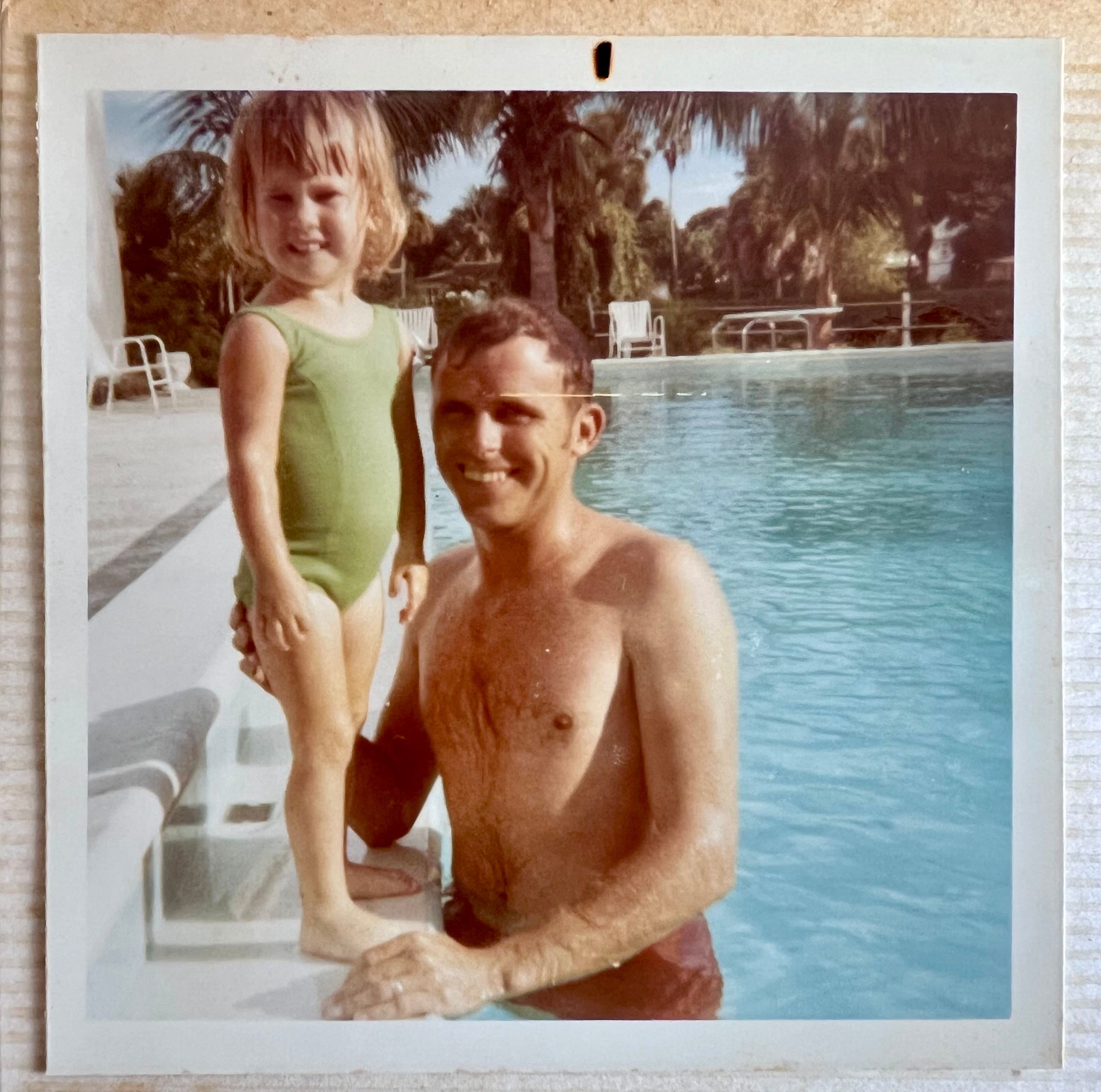
At one point near the end Dad said he was worried about leaving my sister and me behind. We tried to reassure him that we’d be okay, acknowledging that it was going to suck with him gone — we weren’t exactly looking forward to it — but supporting his decision to die and giving him credit for his parenting. But I’m not sure we’re okay. And that’s okay.
Beautiful piece. It's a tough loss. (((Hugs)))
The Book of Common Prayer has come in handy many a time, many a situation.